
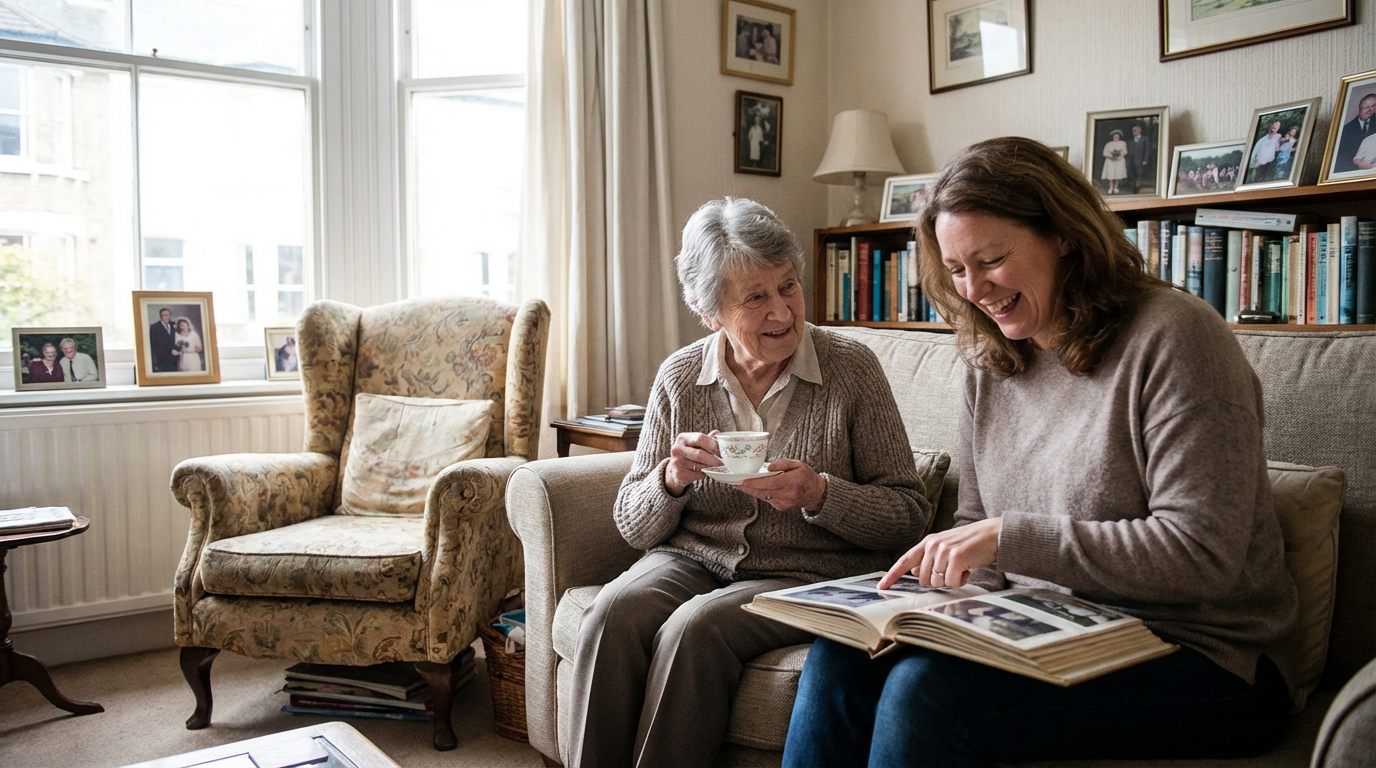
It's the conversation nobody wants to have, but many families desperately need: talking to elderly relatives about accepting help at home. Whether it's your parent, grandparent, aunt, uncle, or another cherished older relative, broaching the subject of live-in care feels fraught with emotional complexity.
You're worried about their safety and wellbeing. They're fiercely protective of their independence. Both positions come from love—and both are valid. The challenge is finding a path forward that honours their autonomy whilst addressing genuine concerns about their ability to manage safely at home.
This guide offers practical, compassionate strategies for navigating this difficult conversation—acknowledging the emotions involved whilst providing actionable guidance that respects dignity, maintains relationships, and ultimately supports the wellbeing of someone you care deeply about.
Before you can have the conversation, you need to recognise when it's actually necessary. Sometimes families wait too long, prompted only by crisis. Other times, well-meaning relatives push for care before it's truly needed, undermining the older person's confidence and autonomy.
Watch for these indicators that your relative might benefit from additional support:
Margaret noticed her mother seemed more forgetful during phone calls, but dismissed it as normal ageing. Then her mother's neighbour rang to say she'd found the front door wide open at midnight, with her mother asleep upstairs, unaware.
A visit revealed spoiled food in the fridge, unopened post piling up, and her mother wearing the same clothes for several days. The "mild forgetfulness" was actually significant cognitive decline that her mother had been successfully hiding during brief phone conversations.
Margaret wished she'd acted on her initial concerns rather than waiting for a crisis that could have ended tragically.
The key insight: Early conversations, whilst uncomfortable, are far easier than crisis conversations. If you're noticing concerning patterns, it's time to talk—even if your relative insists everything is fine.
The worst approach is to wing it. Preparation significantly improves the likelihood of a productive, respectful conversation that moves things forward rather than creating defensiveness and conflict.
Before raising the topic, educate yourself about what live-in care actually involves. Many elderly people (and their families) have outdated or inaccurate assumptions about home care.
Understand the practicalities:
Having concrete information helps you answer questions and address misconceptions. It also demonstrates you're taking their concerns seriously rather than making vague suggestions.
If siblings or other relatives are involved, align your approach before speaking to your elderly relative. Presenting a united, supportive front is far more effective than contradictory messages from different family members.
Discuss:
Timing and setting matter enormously. Avoid:
Instead, choose:
Before you speak, remind yourself:
For more guidance on preparing for difficult family conversations about care, Age UK offers helpful resources on their website.
The opening sets the tone for everything that follows. You want to convey care and concern without being patronising or alarmist.
Sharing your feelings is less confrontational than stating their limitations:
Frame it as proactive planning rather than crisis response:
Gentle hypotheticals can open discussion without direct criticism:
Avoid language that diminishes, criticises, or removes agency:
Frame live-in care in ways that emphasise independence and choice:
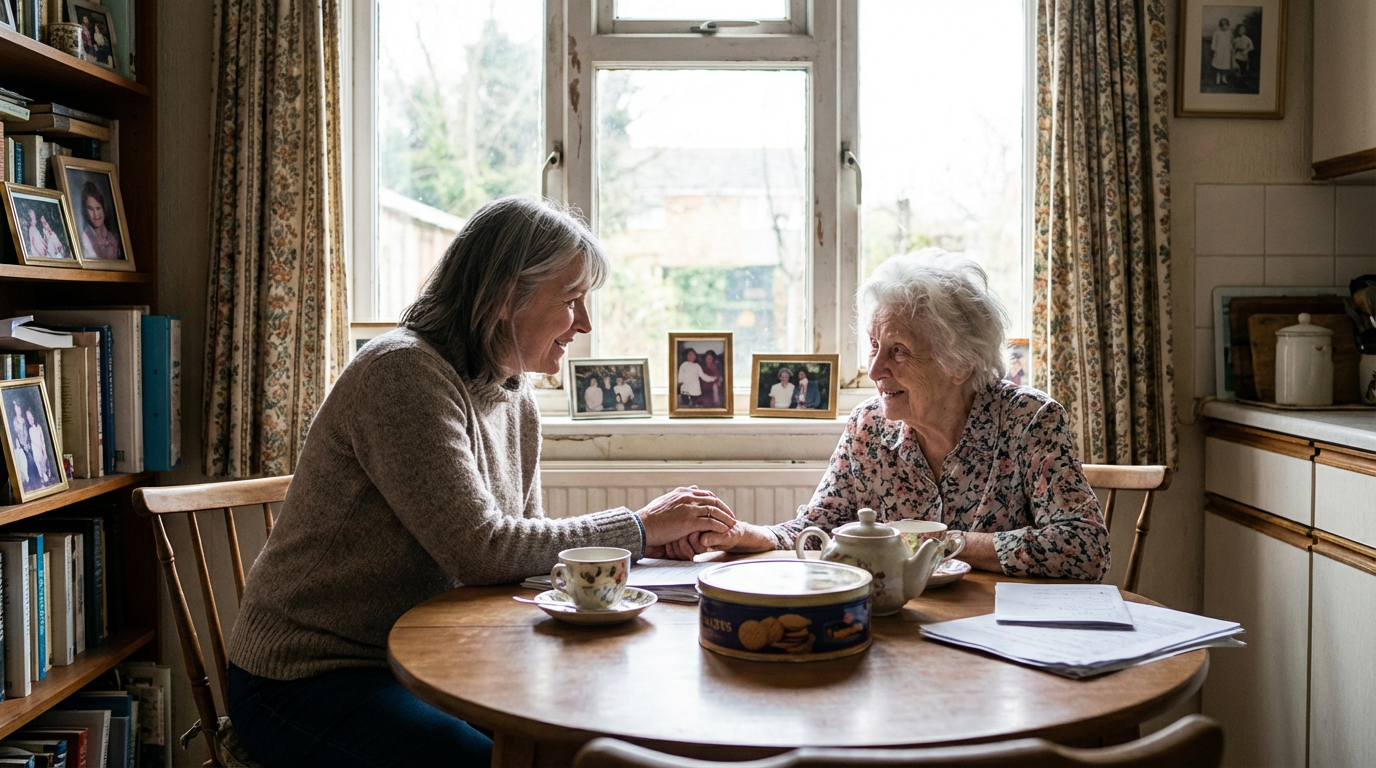
Expect resistance. It's normal, healthy, and doesn't mean you should give up. Here's how to address the most common objections with empathy and practical responses.
Acknowledge the validity: "I completely understand. Your home is your private space, and having someone new there would feel intrusive."
Address the concern:
Don't directly contradict. Instead, ask gentle questions:
Reframe the conversation:
Flip the script: "Actually, live-in care would help prevent you becoming dependent on us in a crisis. It means we can be your family, not your carers—we can enjoy time together rather than worrying constantly."
Explain:
Have facts ready: Know the approximate costs and be prepared to discuss them honestly. Live-in care typically costs less than residential care whilst allowing your relative to remain at home.
Explain funding options:
Offer to explore together: "Let's find out exactly what it would cost and what financial support might be available. We can make informed decisions once we have the facts."
This is often the biggest fear for elderly people—and the most important to address effectively.
Emphasise how live-in care preserves independence:
Contrast with alternatives: "The alternative—managing alone and potentially having a fall or crisis—that's what would genuinely threaten your independence. This actually protects it."
David's father flatly refused to consider live-in care, insisting he was "perfectly capable." Rather than arguing, David suggested his father meet someone receiving live-in care to understand what it actually involved.
His father spoke to a neighbour's relative who had a live-in carer. Hearing firsthand how it worked—and crucially, how much independence the person maintained—completely changed his perspective. He agreed to a trial period, and within three weeks was telling anyone who'd listen how wonderful his carer was.
The lesson: Sometimes seeing or hearing from someone experiencing it is more persuasive than any amount of family discussion.
Family dynamics can significantly complicate or smooth the process of arranging care. Getting everyone aligned—or at least managing disagreements constructively—makes a substantial difference.
It's common for siblings or family members to have different perspectives:
Strategies for navigating family disagreements:
Include your relative in family discussions where appropriate. Talking about them without involving them can feel patronising and increase resistance.
Money conversations are difficult in any context—discussing care costs with elderly relatives adds additional emotional complexity.
Ask permission: "Can we talk about how care might be funded? I want to make sure we explore all the options available."
Be honest about costs but also about funding sources:
Address inheritance concerns directly if raised: "Your wellbeing and safety now matter far more than any inheritance later. We'd rather you were comfortable and safe than worrying about leaving us money."
Be transparent about family contributions: If siblings or family members plan to contribute financially, discuss this openly. If seeking local authority support, explain the assessment process honestly.
For detailed information about care funding, the Age UK guide to paying for care provides comprehensive, impartial information.
The more ownership and control your elderly relative has over the process, the more likely they are to accept and benefit from care arrangements.
Wherever possible, let them lead:
Offer options, not solutions. Present possibilities and let them weigh in on preferences.
Grace's grandmother initially refused to consider any help. Rather than pushing, Grace asked: "What would it take for you to feel comfortable with someone helping at home?"
Her grandmother said she'd only consider it if she could choose the person herself and if they liked gardening (her passion). Grace arranged for her grandmother to meet three potential carers, all of whom enjoyed gardening. Her grandmother chose one, they spent the first week working in the garden together, and the care relationship grew from there.
By giving her grandmother control, Grace transformed resistance into engagement.
Remember: This is still their life, their home, their choices. You're supporting, not taking over. Their comfort, happiness, and sense of autonomy matter as much as their safety.
Once there's agreement in principle to explore live-in care, here's what the process typically involves:
A professional assessment determines the level and type of care needed. This can be arranged through your local authority social services or privately through care providers.
The assessment considers:
Look for care providers with:
At Twelve Trees Care, we provide live-in care services with carefully matched carers and comprehensive support. We're happy to discuss your specific situation and answer questions, even if you're just exploring options.
The matching process is crucial. Personality fit matters as much as skills and experience. Most reputable providers will arrange meetings before any commitment.
What to look for in the matching process:
Care needs change. Regular reviews ensure the care remains appropriate:
Remember: This is a process, not a one-time decision. Good care providers support ongoing adjustments as needs evolve.
At Twelve Trees Care, we understand how challenging these conversations can be. We're here to help with advice and information, even if you're just exploring options and not ready to commit to anything.
Call us on 0330 1649 900 for a no-obligation conversation
Email admin@twelvetreescare.co.uk with your questions
Visit our Live-in Care page to understand how it works
Free, impartial advice • No pressure • Understanding support for families navigating difficult decisions
These authoritative, independent organisations provide valuable information and support for families navigating care decisions:
Care and support guidance including paying for care, choosing providers, and family conversations.
Care and support guide covering needs assessments, funding, and NHS Continuing Healthcare.
Benefits and financial support including Attendance Allowance and local authority support.
Support for family carers including advice, forums, and information about respite options.
These conversations are difficult because they come from love. You want to protect someone who may have spent decades protecting you. The role reversal feels uncomfortable, the emotions are complex, and there are no perfect solutions.
But approaching the conversation with empathy, respect, patience, and a genuine commitment to preserving your relative's autonomy makes an enormous difference. Focus on collaboration rather than prescription. Listen as much as you talk. Honour their fears whilst addressing genuine safety concerns.
Live-in care, when approached thoughtfully and implemented well, can genuinely preserve independence, enhance quality of life, and provide peace of mind for everyone involved. It allows elderly relatives to remain in their own homes, maintaining the rhythms and routines that matter to them, whilst ensuring safety and support.
The conversation may be difficult, but the outcome—enabling someone you love to live safely and comfortably in their own home—makes it worthwhile.
We support those who once supported us. Sometimes the most loving thing we can do is have the difficult conversation.