
This week, the National Pharmacy Association warned that medicine shortages in the UK are now among the most severe on record. I wanted to write about what this actually means for the families and clients we support, and — more usefully — what to do about it.

Caption to confirm against actual image content
A new NPA survey has found that 89% of pharmacies were unable to dispense a medicine at least once a day over the past year, and 98% had patients visiting several different pharmacies in a single day trying to source a prescription. 96% of pharmacies said the situation now poses a serious risk to patient safety.
Some shortages have run for an unusually long time. The shortage protocol for Creon — a medicine that helps people with pancreatic cancer and cystic fibrosis digest food — has been in place since May 2024 and was extended again this April, making it the longest-running individual medicine shortage in NHS history. A common HRT medicine, Estradot, has been affected since December 2024. More commonly prescribed medicines like painkillers, blood pressure tablets and epilepsy medication have also been affected.
Many of the people we support rely on regular medication as part of their daily routine — for heart conditions, blood pressure, pain management, and more. A shortage isn't just an inconvenience; it can mean a genuinely worrying gap for someone who depends on that medicine to stay well, especially if they're not in a position to chase it up themselves.
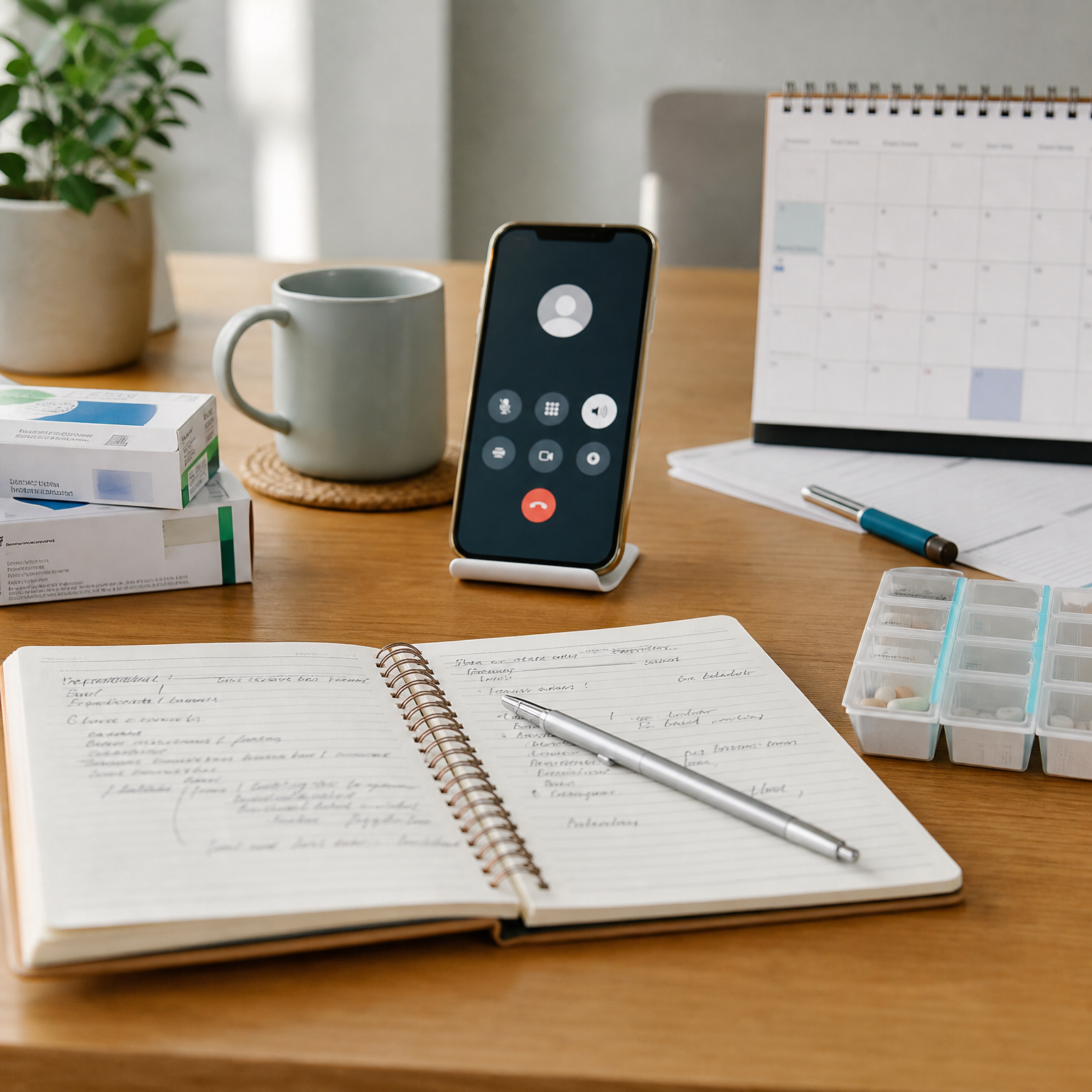
Caption to confirm against actual image content
The NHS's official advice is straightforward, and it's worth following closely:
If your usual pharmacy can't get your medicine, a few things might happen: you could be asked to collect from a different pharmacy, given a different formulation of the same medicine (a tablet instead of a capsule, for example), given a smaller quantity that means collecting more often, or sent back to your GP for an alternative prescription.
It's worth knowing that pharmacies which aren't part of the same company can't see each other's stock on a shared system — so if one says no and another says yes, that's just how the system works, not a sign anyone's being unhelpful.
A Family Checklist for Medicine Shortages
The thing that makes the biggest difference in a shortage isn't any single action — it's communication staying open between the carer, the family, the pharmacy and the GP. A small gap that gets flagged early is manageable. The same gap, left unnoticed for a few days, can turn into a genuine problem.
For our home care clients, our carers are part of that loop — they're often the ones who notice first if a medication round looks different, or if something hasn't arrived when expected, and they flag it straight away so it gets sorted before it becomes urgent.
If you're supporting someone who relies on regular medication and you're concerned about a current or upcoming shortage, it's worth having a conversation with their pharmacist sooner rather than later.
Sheffield: 0114 255 5155
Leeds: 0113 232 0054