Last week, senior leaders from across adult social care gathered at Church House in Westminster for the Social Care Summit 2026. It's not a consumer event — it's where providers, commissioners, investors and policymakers debate the big questions facing the sector. But the themes coming out of it matter to families too, because they're a window into how care is likely to look over the coming years. Here's our take on three of the shifts that stood out, and what they mean if you're thinking about care for someone you love.
Held on 17 June and run by LaingBuisson, the summit brought together providers across care homes, homecare and specialist care, alongside local authorities, government representatives and sector bodies. Set against the backdrop of Baroness Casey's ongoing Independent Commission on Adult Social Care, the discussions focused on how investment, technology, workforce and regulation are reshaping the way care is delivered. Three themes in particular felt relevant to the kind of care we provide.

Why More Care Is Moving into the Home
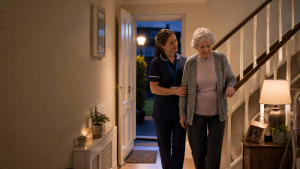
One of the clearest messages from the summit was that care is steadily moving out of institutional settings and into people's own homes and communities. There's a visible migration from residential care towards home care and supported living, with even higher-needs support increasingly being delivered in community settings rather than clinical ones.
This is borne out in the numbers. The number of domiciliary care organisations regulated by the CQC rose to over 15,000 in the past year, up from around 13,700 the year before. Importantly, the people at the summit were clear that this isn't simply a cost-driven trend — it reflects changing expectations around independence, dignity and personalised care. More and more families want their loved ones to stay in familiar surroundings for as long as it's safe and right to do so.
For us, this isn't a new idea — it's the principle our home care and live-in care services have always been built around. But it's striking to see it recognised so clearly as the direction the whole sector is heading.
If there was one point of consensus at the summit, it was this: the single most important asset in social care is the people who deliver it. And the conversation has moved on from pay alone. While fair pay obviously matters, the summit kept returning to training, career progression, and whether staff feel genuinely valued — with evidence that organisations investing in development see measurably lower staff turnover.
The timing is notable. Just days after the summit, Skills for Care published new figures showing the sector's vacancy rate has fallen to 6.2%, its lowest level in a decade. That's genuinely encouraging. But the same report carried a clear warning: vacancies are still far higher than in the wider economy, the number of domestic care workers is falling, and there's no dedicated visa route for international recruitment. In home care specifically, vacancy rates remain higher than in residential settings.
What this means in practice is that the providers who will thrive are the ones who treat their carers as a priority to invest in, not a cost to manage. For families, it's worth remembering that consistency of care — seeing the same familiar faces — depends entirely on a provider's ability to attract and keep good people.

How Technology Can Support Better Care at Home
Unsurprisingly, technology and AI featured heavily. But the most sensible voices at the summit landed on a reassuring conclusion: technology alone won't transform care — people using technology well might. The emphasis was on AI as a tool to support the workforce, with talk of identifying "AI champions" within teams rather than imposing change from the top down.
In care, AI is already quietly present — in staff rostering, digital care planning, and remote monitoring that can flag a change in someone's wellbeing early. Used well, these tools free carers up to spend more time on the human side of care, not less. The thing families should look for isn't whether a provider uses technology, but whether it's being used to enhance the relationship between carer and client, rather than dilute it. Good care will always be fundamentally human, and the best use of technology is the kind that protects that.
One framing from the summit stuck with us: the "three As" — AI, automation, and ambition. The point was that the first two get all the attention, but it's ambition that will ultimately decide whether the sector simply evolves or genuinely transforms. After years of social care reform feeling permanently just out of reach, there was a real sense that the sector understands its problems clearly — the challenge now is being bold enough to act on them.
It's easy to read sector debates like these as abstract, but they have a very practical bottom line for families. The direction of travel — towards care at home, delivered by a valued and well-supported workforce, with technology used thoughtfully to support rather than replace human care — is exactly the kind of care most families say they want. If you're weighing up options for a loved one, those are reasonable things to ask any provider about: How do you look after your carers? How do you ensure consistency? How does any technology you use actually benefit the person being cared for?
If you're thinking through care options for someone you love, we're always happy to have an honest conversation about what would work best.
Sheffield: 0114 255 5155
Leeds: 0113 232 0054