
Every September, World Alzheimer's Month asks us to look a little harder at dementia, and at one idea in particular that quietly causes a great deal of harm: the belief that dementia is simply part of getting older. It is not. It is a condition, and like any condition it can be understood, planned for and lived with well. For families, the most reassuring thing to know is that support is not a single decision made once. It changes as the person changes, and the right help at one stage is rarely the right help forever. This is a look at how dementia support works across different settings, and how to think about what fits at each point in the journey.
Around 982,000 people are living with dementia in the UK, and that number is expected to rise to 1.4 million by 2040. One in three people born today will develop it. Yet more than a third of people who have dementia have no formal diagnosis, often because the early changes are mistaken for ordinary ageing.
Dementia is not a single illness. It is a group of symptoms caused by different diseases of the brain. Alzheimer's disease is the most common form, followed by vascular dementia, and there are several others, each with its own pattern. Two people with the same diagnosis can present very differently, and the same person will change over months and years. This is why there is no single correct answer to the question families ask most, which is simply what should we do. The honest answer is that it depends on the person, the stage they are at, and what matters most to them and to those around them.
What stays constant is the goal. Good dementia support is about helping someone keep hold of the routines, relationships and small daily pleasures that make life feel like theirs, for as long as possible, and adapting the level of help around that rather than the other way round.
In the early period after a diagnosis, most people want the same thing, which is to carry on at home. Familiar surroundings genuinely help. Someone who is beginning to find new places disorientating is usually calmer and more capable in a home they know, where the kettle is where it has always been and the route to the bathroom needs no thinking about.

The support that makes this possible is often lighter than families expect. A visiting carer coming in at set times can take the pressure off the moments that have become difficult, whether that is medication, a proper meal, or simply company and a friendly check that all is well. Our visiting home care operates across Sheffield, covering the S7, S8, S10 and S11 areas, and it is designed to fit around a person's existing routine rather than replace it.
Day care is the other quiet workhorse of this stage. A regular day at one of our care homes gives structure to the week, a change of scene, activities and the kind of easy social contact that becomes harder to arrange as confidence dips. It also gives a family carer a dependable few hours to themselves, which matters more than it sounds. We run day care at both our Sheffield home and Meadowbrook Manor in Leeds.
For many people there comes a point where visiting care is no longer quite enough, but a move still feels premature or unwanted. This is where live-in care earns its place. A trained carer lives in the person's own home and provides one-to-one support through the day and night, which for someone with dementia has a particular value: the same familiar face, the same routines, and continuity that a rota of different visitors cannot match.
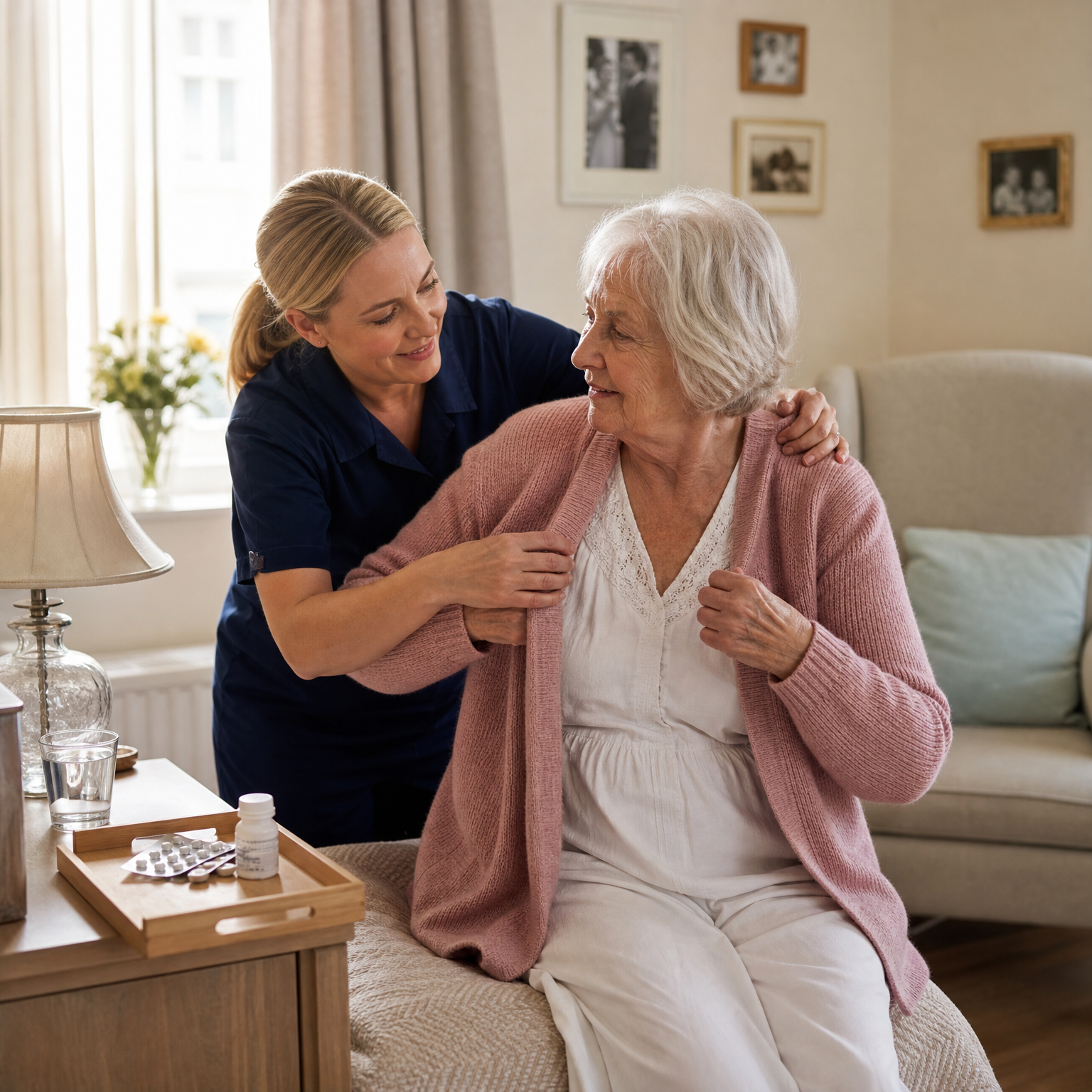
We provide live-in care nationwide, and because we deliver it ourselves rather than simply introducing a carer and stepping back, we meet every live-in carer in person before they work with a family and plan changeovers in advance to protect that continuity.
Respite belongs in this stage too, and it is one of the most under-used forms of support there is. A short residential stay at one of our homes, or live-in respite in the person's own home, gives a family carer a proper break while the person is well looked after. Taking respite is not a sign of failing to cope. It is often the very thing that allows someone to keep caring for the long haul.
Sometimes home is no longer the safest or happiest place, and a care home is genuinely the better answer. Around 70 per cent of people living in care homes in England have dementia or a severe memory problem, so a good home is not an unfamiliar environment being asked to cope with dementia as an exception. It is a setting built around it.
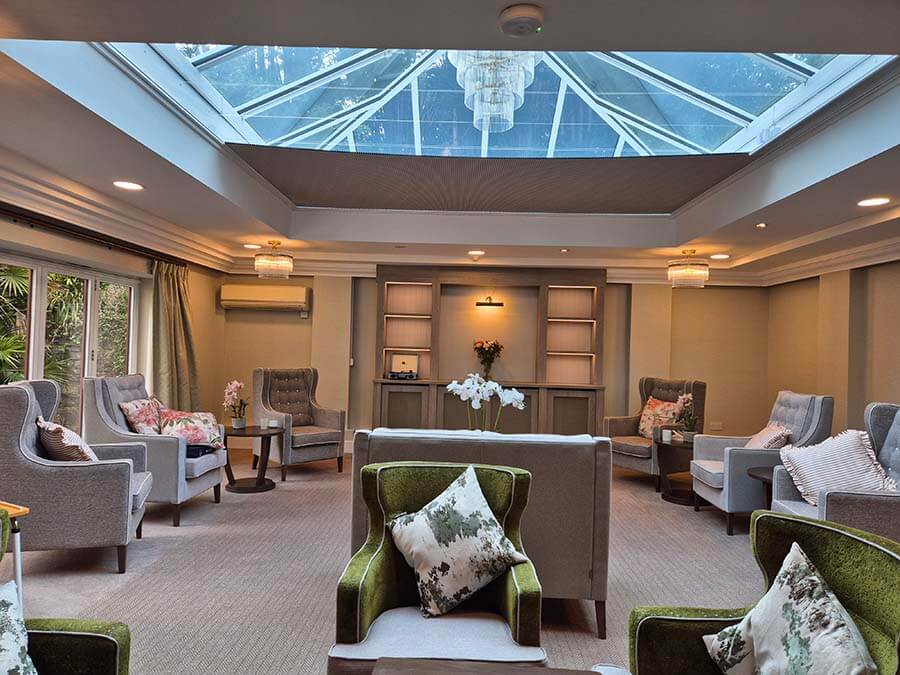
For some people the round-the-clock reassurance, the company of others, the activities and the removal of daily worries lift their quality of life in a way that no amount of support at home could. Our Sheffield home on Priory Road in Nether Edge and Meadowbrook Manor in Garforth both provide residential dementia care with carers trained specifically in it, in surroundings designed to feel calm and homely rather than clinical.
Choosing residential care is not giving up, and it is worth saying plainly, because so many families carry guilt they have not earned. The measure of a good decision is whether the person is safe, settled and well cared for, not where the care happens to take place.
If there is one thread that runs through everything above, it is continuity. Dementia is harder for everyone when the people and places involved keep changing. Someone who has to re-explain themselves to a new face every few weeks loses ground each time.
There is a practical advantage to a provider that offers the full range of dementia care and support, which is that the relationship does not have to reset each time needs change. A family that begins with a few hours of visiting care can move to live-in care, use respite when they need it, and if the time comes, consider one of our homes, without starting again with strangers each step of the way. Having been family owned since 1996, and with our Sheffield home and home care service rated Good by the Care Quality Commission, that continuity is something we have built the whole organisation around.
If you are trying to work out the next step, a few things help. Start with the person rather than the service, and be clear about what they most want to protect, whether that is staying at home, keeping certain routines, or being near particular people. Ask for a needs assessment through your local authority, which can also open the door to support you may be entitled to. Talk to the professionals already involved, the GP, a memory clinic, an occupational therapist, who can often see practical options a family in the thick of it cannot.
And do not feel you have to decide everything at once. The right approach to dementia is to match support to where the person is now, and to keep the conversation open as things change, rather than to make one large irreversible decision under pressure.
If you are weighing up dementia support for someone, whether that is a little help at home or something more, we are happy to talk it through without any obligation, and to be honest with you about what we think would suit best. You can call us on 0330 1649 900 or get in touch through our contact page.
From a little help at home to live-in care and our care homes, we can adapt as needs change, without you ever starting again with strangers.
Explore our dementia careA friendly, no-obligation chat about what might suit your loved one best. Call us on 0330 1649 900.
Get in touch